Connect this guide with the rest of your visit in the Tallinn trip planner. Read how the research is made and what its sources establish.
At a glance
Start here
- Kalamaja's identity joins a much older fishing settlement with industrial-era urban growth.
- Wooden housing is evidence of expansion and ordinary domestic life, not just a colour palette.
- The Kalamaja Museum uses resident stories and one 1930s house to bring change down to human scale.
- Telliskivi shows a later reuse of factory space and should be read alongside, not instead of, the residential district.
01
Begin before the wooden-house postcard
Visit Tallinn identifies Kalamaja as a former medieval fishing village that later became a modern industrial centre and home for workers in the early twentieth century. That sequence explains why the district cannot be understood only through architecture. Employment, proximity to the railway and waterfront, and the need for housing changed its scale and social composition.
The oldest identity and the industrial city do not form a neat before-and-after picture. Neighbourhoods accumulate. When you walk here, ask which routes point toward work, which plots preserve domestic scale, and where larger compounds interrupt the smaller fabric. Those contrasts reveal change more reliably than searching for one supposedly typical street.
Sources: Visit Tallinn02
See wooden housing as an answer to growth
Kalamaja is known for a large concentration of preserved wooden houses, including the local building form commonly called the Tallinn house. Official neighbourhood material connects this housing landscape with the area's development as an industrial workers' district. The structures therefore record urban expansion, construction practice, and household life as well as visual character.
Look beyond painted boards. Notice the width of the plot, the position of entrances, changes at the foundation, shared yards, and the relationship between neighbouring buildings. Avoid assuming that colour, windows, or decorative details all belong to the same date. Repair and adaptation are part of the evidence, and the houses remain private homes rather than an open-air museum.
Sources: Visit Tallinn; Tallinn City Museum03
Let one house carry a difficult timeline
The building that now houses Kalamaja Museum was constructed in 1932–1934 to a design by architect Herbert Johanson. It was damaged in the Soviet air raid of 9 March 1944, then rebuilt and adapted into residential and studio apartments. A single address thus connects interwar design, wartime destruction, postwar reuse, and later museum work.
That biography warns against reading a façade as a fixed historical moment. A home can be planned, damaged, divided, repaired, and reassigned while retaining portions of earlier fabric. Carry the same caution to other streets: identify what is documented, distinguish it from visual inference, and leave room for changes that cannot be dated from the pavement.
Sources: Tallinn City Museum04
Enter the neighbourhood through resident stories
Kalamaja Museum's permanent exhibition, A Village in the Middle of the City, was developed around stories and objects contributed by local people. Instead of one detached chronology, it introduces neighbourhood characters and places material in domestic spaces such as the cellar, corridor, garage, and living room. Its dollhouse also interprets a Tallinn-type house from the inside.
This method matters because built heritage alone can hide tenants, routines, work, childhood, and disagreement. Use the museum to test what the street view omitted. An exterior may suggest construction and status; a resident's object can explain use and attachment. Neither is complete alone, and the museum openly makes that relationship its subject.
Sources: Tallinn City Museum05
Do not smooth war damage out of the district
The documented damage to the museum building in March 1944 gives a precise local instance of a wider rupture. Its subsequent reconstruction as living and studio space shows that survival may include major alteration. Calling the district well preserved should never imply that every house passed untouched through the twentieth century.
Look for repair without turning scars into spectacle. A changed roofline, material break, or rebuilt section needs archival evidence before it can be assigned to a particular event. The museum house supplies that evidence for itself; it does not automatically date similar marks elsewhere. This distinction keeps historical curiosity from becoming confident invention.
Sources: Tallinn City Museum06
Compare homes with Telliskivi's factory scale
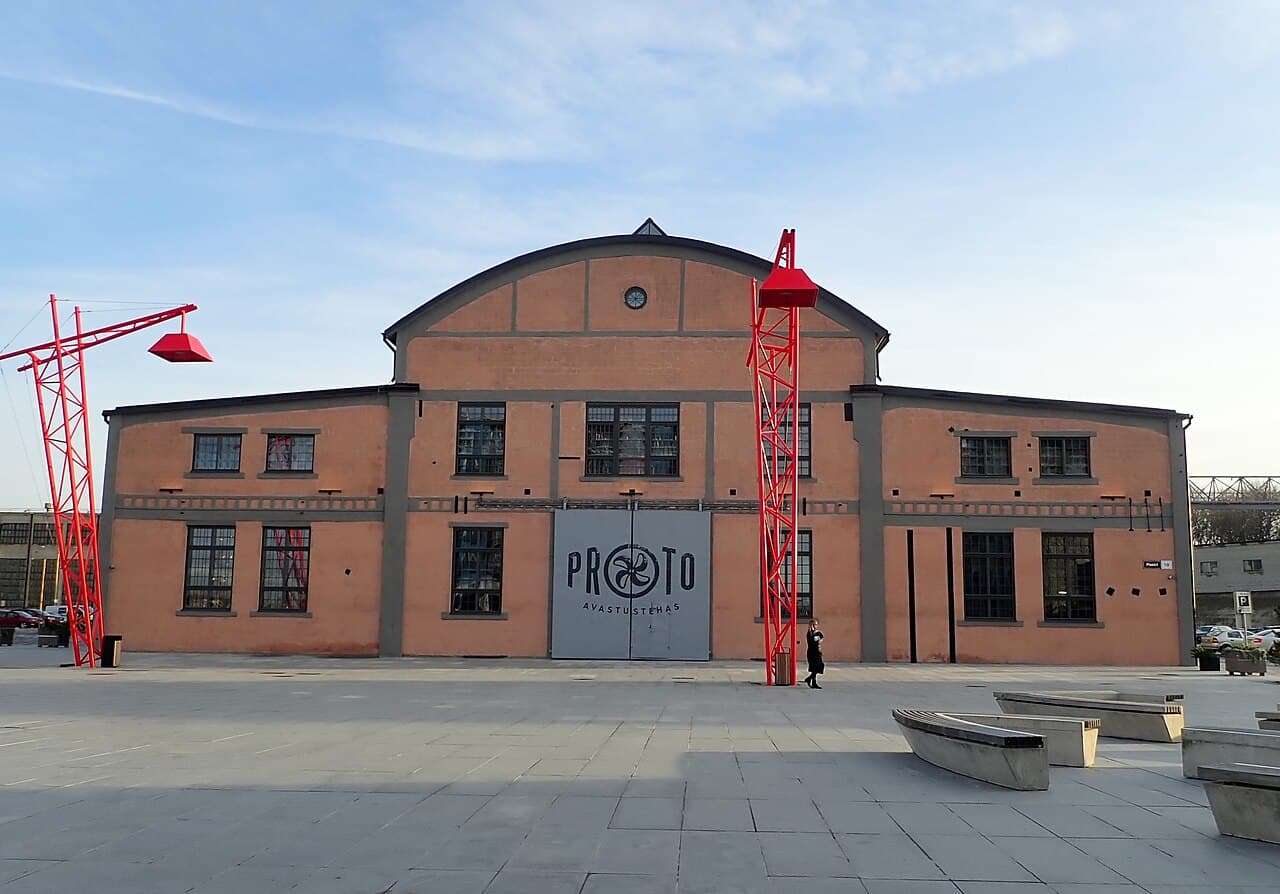
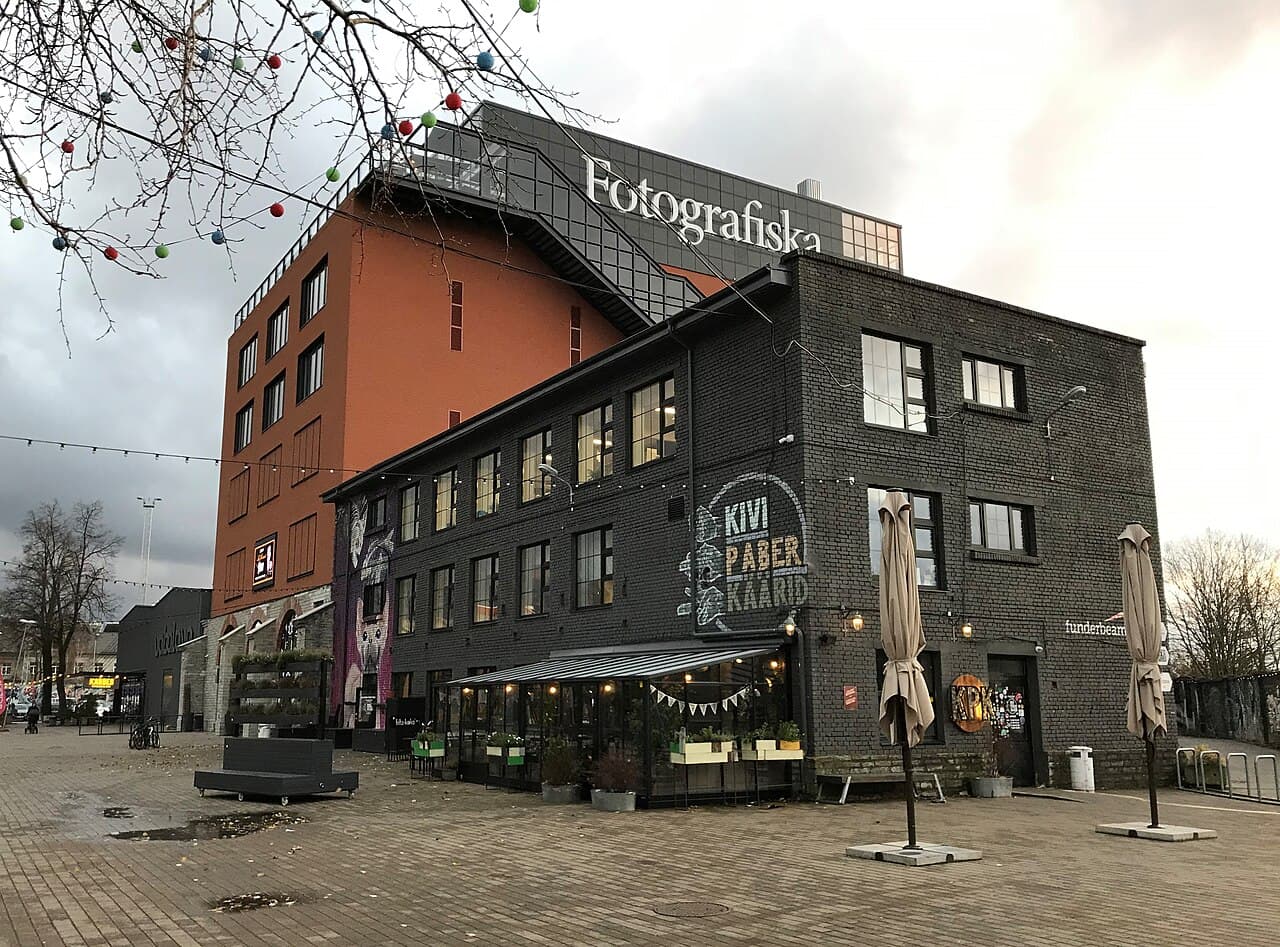
Telliskivi Creative City's own history describes a former factory complex whose reuse began in 2007, with its first tenant arriving in 2009. The project retained and adapted industrial structures for cultural and commercial activity. Whatever one thinks of the result, the compound represents a later economic layer than the workers' housing around it.
Read the transition physically. Factory yards, larger spans, service surfaces, and repeated industrial volumes operate at a different scale from wooden plots. Moving between them shows why 'Kalamaja style' is too simple a label. The district holds domestic fabric, industrial production, and post-industrial reuse in close proximity.
Sources: Telliskivi Creative City; Visit Tallinn07
Look closely without treating homes as props
A responsible walk stays on public routes, keeps cameras out of private windows and yards, and accepts that a neighbourhood is not staged for visitors. Choose a few blocks, compare building scale and plot rhythm, then use the museum or documented district history to check your interpretation. More distance does not necessarily produce more understanding.
End at an industrial edge such as Telliskivi only after spending time with the residential fabric. That order prevents the best-known cultural complex from standing in for the whole district. Kalamaja becomes legible when fishing history, workers' housing, wartime rupture, resident memory, and adaptive reuse remain distinct but connected.
Sources: Visit Tallinn; Tallinn City Museum; Telliskivi Creative CityUseful answers
Reader questions
What is distinctive about Kalamaja's wooden houses?
They form a substantial surviving residential landscape associated with Kalamaja's growth as an industrial workers' district. The local Tallinn-house type is part of that story. Their value is not only decorative: plots, entrances, yards, repairs, and interiors can reveal how rapid urban growth became everyday housing.
Sources: Visit Tallinn; Tallinn City MuseumWhy is the Kalamaja Museum useful if I can see the streets for free?
The museum adds resident-contributed objects and stories that façades cannot provide. Its permanent exhibition places neighbourhood characters in domestic settings, and its dollhouse interprets a Tallinn-type home from within. It turns an architectural walk into a social history rather than a collection of exterior photographs.
Sources: Tallinn City MuseumIs Telliskivi representative of all Kalamaja?
No. Telliskivi is a reused factory complex whose current development began in 2007. It represents industrial scale and post-industrial adaptation. Kalamaja also contains much older settlement history and extensive residential fabric, so Telliskivi is best understood as one layer at the district's edge.
Sources: Telliskivi Creative City; Visit TallinnCan I identify wartime damage just by looking at a house?
Usually not with confidence. The Kalamaja Museum building has a documented history of damage in the March 1944 air raid and later reconstruction, but similar-looking alterations elsewhere may have different causes. Treat visible seams as questions and use building-specific records before assigning a date or event.
Sources: Tallinn City MuseumRead the evidence
Sources and further reading
These sources support the relevant sections above. Plans and comparisons are editorial suggestions. Check operators for current arrangements.
- Kalamaja ↗Visit Tallinn · Research date 14 September 2026
The fishing-village origin, industrial and workers' district development, wooden houses, and major present-day sites.
- About Kalamaja Museum ↗Tallinn City Museum · Research date 14 September 2026
The permanent exhibition, resident contributions, domestic display settings, characters, and Tallinn-house dollhouse.
- History of the Kalamaja Museum Building ↗Tallinn City Museum · Research date 14 September 2026
The building's 1932–1934 construction, architect, 1944 bomb damage, and residential reconstruction.
- The Story of Telliskivi Creative City ↗Telliskivi Creative City · Research date 14 September 2026
The former factory setting, adaptive-reuse start in 2007, first tenant in 2009, and project approach.