Connect this guide with the rest of your visit in the Tallinn trip planner. Read how the research is made and what its sources establish.
At a glance
Start here
- Choose upper-to-lower or lower-to-upper.
- Use walls and gates for orientation.
- Pick one interior tied to your main question.
- Check mobility and opening details directly.
01
Walk from power to trade, or reverse it
UNESCO describes the historic centre as a surviving medieval northern European trading city whose upper and lower towns kept different functions. That structure is the route. Cobbles, gradients, worship, government and residential use also mean a map line is not a complete access plan.
- Choose upper-to-lower or lower-to-upper.
- Use walls and gates for orientation.
- Pick one interior tied to your main question.
- Check mobility and opening details directly.
02
See a city system before a postcard
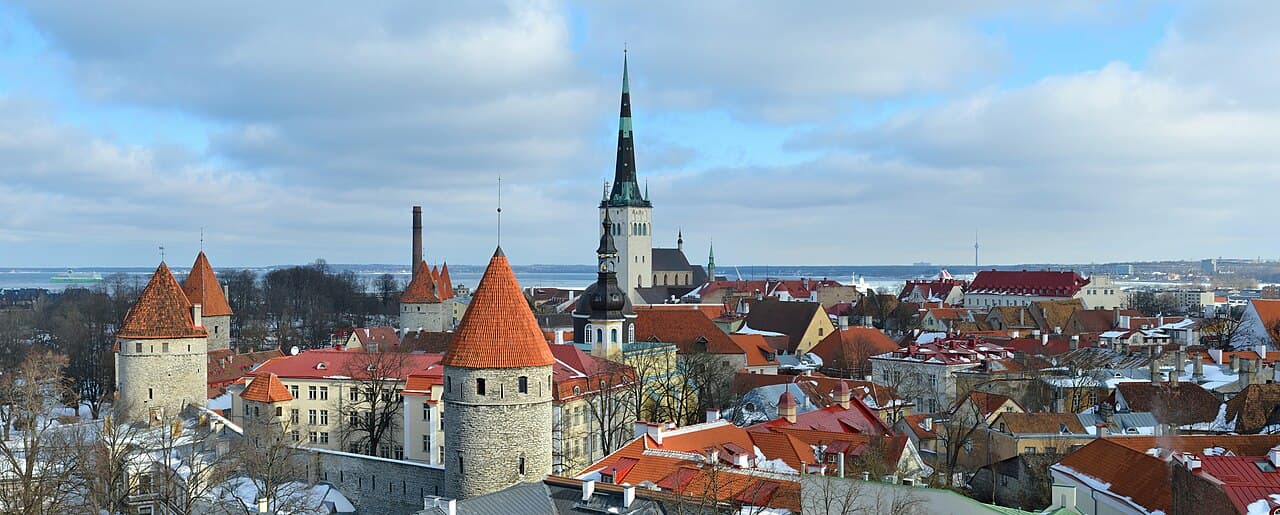
UNESCO describes Tallinn's historic centre as an unusually complete and well-preserved medieval northern European trading city. Its value lies not only in isolated monuments but in the relationship among the upper stronghold, lower commercial town, churches, public buildings, merchant houses, streets, and defensive works. That is the scale at which to begin looking.
Stand where several street directions are visible. Ask which route would move goods toward a market, which slope changes status or function, and why a tower or steeple dominates that view. You do not need a perfect reconstruction. The goal is to notice that repeated alignments and boundaries carry historical information even when individual buildings have later surfaces.
Sources: UNESCO World Heritage Centre; Tallinn Town Hall03
Use elevation to understand divided authority
The protected ensemble grew around a thirteenth-century castle on Toompea and a lower town that developed into a major Hanseatic centre. The physical distinction matters: the upper stronghold and the lower merchant city did not express the same institutions. Even without tracing every jurisdictional change, the climb reveals that power occupied more than one centre.
Look back while moving between levels. Gates, bends, and steep connections regulate sight and passage. Then compare the skyline above Toompea with the commercial and ecclesiastical landmarks below. Reading the terrain prevents the common mistake of treating Old Town as one harmonious medieval neighbourhood with a single social story.
Sources: UNESCO World Heritage Centre04
Read Town Hall as municipal machinery
Tallinn Town Hall is the only surviving Gothic town hall in northern Europe. Its present medieval form largely dates from rebuilding in 1402–1404, while municipal government developed under the Lübeck law granted to Tallinn in 1248. The council represented a merchant-led civic order and used the building for administration, justice, and ceremony.
Do not isolate the façade from Town Hall Square. Consider who needed to approach the building, who could be seen there, and how the square supported exchange and public authority. The building itself has later alterations and restorations, including work after the 1944 air raid, so 'medieval' should describe a historical core, not an untouched object.
Sources: Tallinn Town Hall05
Compare the council with the Great Guild
The Great Guild Hall was completed in 1410 for the Great Guild, an association of powerful Hanseatic merchants. Its history links commercial organization with Tallinn's economic and cultural development. The hall therefore helps distinguish a corporate body of merchants from the municipal council, even though membership, wealth, and civic influence overlapped.
Notice the building's scale within its street rather than judging it only from a frontal photograph. A guild needed spaces for meetings, ceremonies, business, and collective identity. The present history museum gives access to that institution through exhibitions on Hanseatic merchants and the hall itself, but the exterior already makes a claim about organized wealth.
Sources: Estonian History Museum06
Separate walls, towers, and bastions by period
Tallinn's defences were not constructed in one medieval campaign. The Kiek in de Kök Fortifications Museum connects four towers with underground passages associated with the later bastion system. Kiek in de Kök itself took its earliest surviving form in 1483, while the passages belong largely to the late seventeenth and early eighteenth centuries.
That sequence changes how you read a wall. Towers respond to one set of weapons and siege practices; earthworks and bastion passages respond to later artillery. Look for changes in masonry, height, angle, and ground level rather than applying the word medieval to every defensive feature. Museum access can vary, but the chronological distinction remains useful outside.
Sources: Tallinn City Museum07
Reconnect churches with patrons and workshops
Niguliste, the restored former Church of St Nicholas, preserves major works of late-medieval ecclesiastical art. Its high-altarpiece retable was made in Herman Rode's workshop in Lübeck and reached Tallinn in 1481. The surviving Dance of Death fragment, associated with Bernt Notke's workshop, shows how imagery, workshop networks, and urban patronage crossed the Baltic.
When viewing Old Town churches, ask who financed an object, where it was made, and which group used the surrounding space. Guild and church silver at Niguliste extends the question beyond altarpieces. Imported craftsmanship does not make the art less local; it reveals Tallinn's participation in a connected commercial and cultural region.
Sources: Art Museum of Estonia08
Bring the reading down to household scale
Monuments privilege councils, merchants, and institutions. Tallinn City Museum counters that scale from a historic merchant house on Vene Street. Across five floors it connects the Hanseatic city with later homes, fashion, technology, and daily change. The setting also helps visitors notice the narrow plot and interior depth hidden behind a street façade.
After the museum, read an ordinary frontage in layers: commercial access at street level, storage or work space, domestic rooms, and the long property behind. Not every house followed one arrangement, and many have changed repeatedly. The method matters more than forcing a single reconstruction onto every doorway.
Sources: Tallinn City MuseumUseful answers
Reader questions
What makes Tallinn Old Town historically important?
Its importance rests on the unusually coherent survival of a northern European Hanseatic trading city: the upper stronghold, lower town, street and property patterns, merchant houses, churches, public buildings, and defences still form a legible ensemble. The whole relationship carries more meaning than any one landmark.
Sources: UNESCO World Heritage CentreAre all of Tallinn's fortifications medieval?
No. The system has several phases. Kiek in de Kök has a late-fifteenth-century core, but the connected bastion passages largely represent late-seventeenth- and early-eighteenth-century defence. Distinguishing towers, walls, earthworks, and underground passages prevents a misleading single-period reading.
Sources: Tallinn City MuseumWhy visit both Town Hall and the Great Guild Hall?
They clarify different forms of urban power. Town Hall served municipal government under a merchant-led council, while the Great Guild Hall housed an influential association of Hanseatic merchants. Reading them together shows how commerce, corporate identity, and government interacted without being identical.
Sources: Tallinn Town Hall; Estonian History MuseumWhere can I add everyday life to the architectural story?
Tallinn City Museum uses a merchant house to follow city life from the Hanseatic period into later homes, clothing, and technology. Niguliste adds a different human layer through commissioned art and collective silver. Together they reconnect streets and façades to people, objects, and institutions.
Sources: Tallinn City Museum; Art Museum of EstoniaRead the evidence
Sources and further reading
These sources support the relevant sections above. Plans and comparisons are editorial suggestions. Check operators for current arrangements.
- Historic Centre (Old Town) of Tallinn ↗UNESCO World Heritage Centre · Research date 14 September 2026
The ensemble's thirteenth-century origins, Hanseatic significance, integrity, and surviving urban components.
- The Building ↗Tallinn Town Hall · Research date 14 September 2026
Town Hall's Gothic survival, 1402–1404 form, Lübeck law context, council role, and later restoration layers.
- Great Guild Hall ↗Estonian History Museum · Research date 14 September 2026
The current museum's focus on Hanseatic merchants, the guild, money, and arms.
- The Kiek in de Kök Fortifications Museum ↗Tallinn City Museum · Research date 14 September 2026
The four-tower complex, Kiek in de Kök's 1483 form, and later bastion passages.
- Permanent Exhibition of Niguliste Museum ↗Art Museum of Estonia · Research date 14 September 2026
The former church, Rode retable, Dance of Death fragment, and church and guild silver.
- About the Museum ↗Tallinn City Museum · Research date 14 September 2026
The merchant-house setting and displays on city life, homes, fashion, and technology.