Connect this guide with the rest of your visit in the Tallinn trip planner. Read how the research is made and what its sources establish.
At a glance
Start here
- Start at Vabamu for the broad narrative of occupation, exile, Soviet life, and restored independence.
- Use the KGB Prison Cells and the communism-victims memorial for focused evidence of repression and individual loss.
- Maarjamäe Palace frames the republic's century, while Kumu reveals political change through art.
- The Song Festival Grounds add collective cultural action without turning song into the only explanation for independence.
01
Do not ask one site to carry the whole history
A permanent exhibition, an interrogation cell, a memorial landscape, a national-history display, an art collection, and a mass-gathering place answer different questions. Vabamu can supply chronology and personal narratives; the KGB cells preserve a coercive setting; the Maarjamäe memorial names people; Kumu shows how artistic production changed within and after Soviet rule.
Treating them as interchangeable stops weakens each. Begin by identifying the evidence: object, room, testimony, name, artwork, architecture, or remembered gathering. Then ask what is absent. The most responsible account emerges from several partial forms rather than a claim that one institution has resolved every historical argument.
Sources: Vabamu Museum of Occupations and Freedom; Vabamu Museum of Occupations and Freedom; Estonian Institute of Historical Memory; Estonian History Museum; Art Museum of Estonia; Tallinn Song Festival Grounds Foundation02
Use Vabamu to establish the framework
Vabamu's Freedom Without Borders permanent exhibition is organized around crimes against humanity, Estonians in the free world, life in Soviet Estonia, the restoration of independence, and freedom. Its structure connects state power with migration, survival, compromise, resistance, and choices made by individuals and families.
That breadth makes it a strong first stop, not a final answer. Follow one person or object across the political chronology and note when the exhibition shifts from repression to agency. The available electronic guide and family route offer different entry points, but neither removes the need to pause over difficult material.
Sources: Vabamu Museum of Occupations and Freedom03
Let the Pagari Street cells narrow the scale
Vabamu's KGB Prison Cells exhibition occupies part of Pagari 1, a building used for detention and interrogation by Soviet security institutions. The display focuses on prisoner experiences, interrogation, confinement, and ways detainees tried to communicate between cells. The preserved setting makes institutional violence spatially immediate.
Do not use the cells as dramatic entertainment or as proof that every victim had the same experience. Read the rooms with the named and documented stories supplied by the museum. Their value lies in compression: policy becomes a corridor, a locked door, an interrogation process, and the uncertainty experienced by a person held there.
Sources: Vabamu Museum of Occupations and Freedom04
Maarjamäe Palace places regimes in a national century
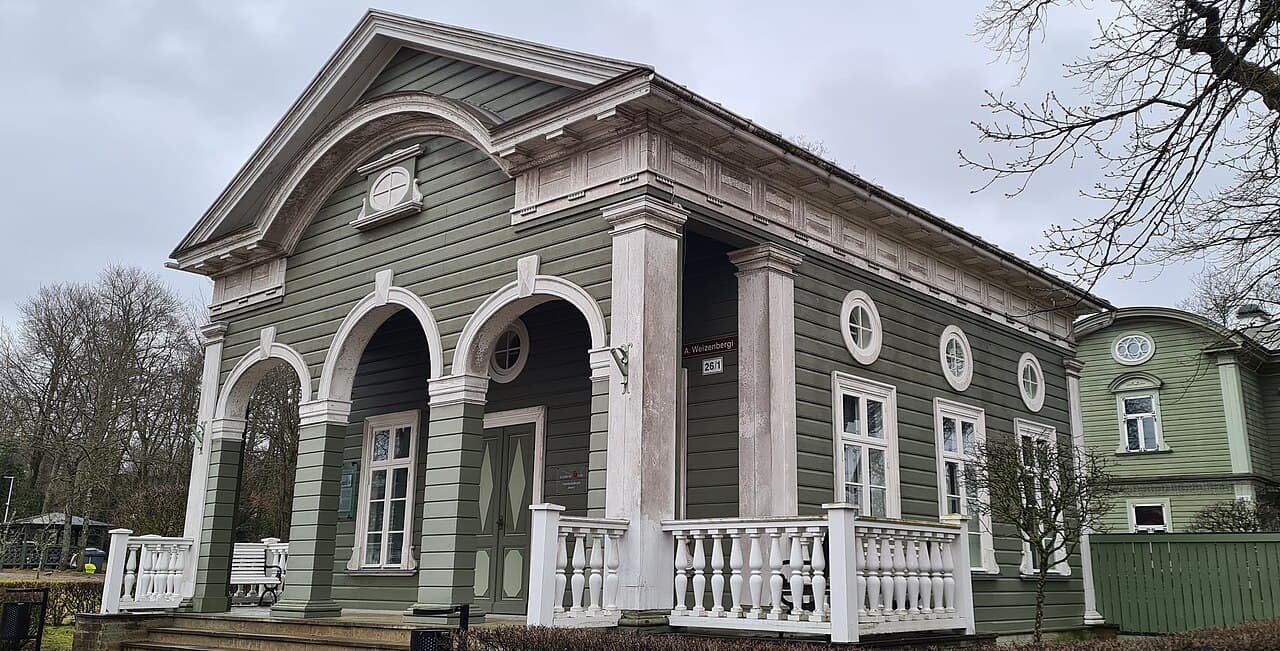
Maarjamäe Palace began as a summer residence commissioned by Count Anatoli Orlov-Davydov. The Estonian History Museum reopened it as a history discovery centre in 2018. Its permanent exhibition, My Free Country, follows one hundred years from the birth of the Estonian republic into the contemporary period.
The palace offers a wider state-history frame than the KGB cells. Its setting and displays allow visitors to compare independence, occupation, Soviet rule, and restored statehood without assuming a smooth progression. The grounds also contain an outdoor collection of Soviet monuments, whose relocation and display introduce a separate question about what societies do with the symbols of a former regime.
Sources: Estonian History Museum05
At the memorial, attend to names and absence
The Memorial to the Victims of Communism at Maarjamäe is organized around two principal spatial ideas. The Journey carries name plaques for victims, while the Home Garden provides a more intimate landscape of memory. An electronic memorial supplements the physical inscriptions and allows the commemorative record to extend beyond stone.
The site should not be treated as a backdrop between attractions. Read enough names to resist reducing loss to a statistic, but do not invent biographies from an inscription alone. The memorial's own database and institutional interpretation are the proper next steps when you want to learn about a particular person.
Sources: Estonian Institute of Historical Memory06
Let Kumu complicate politics through art
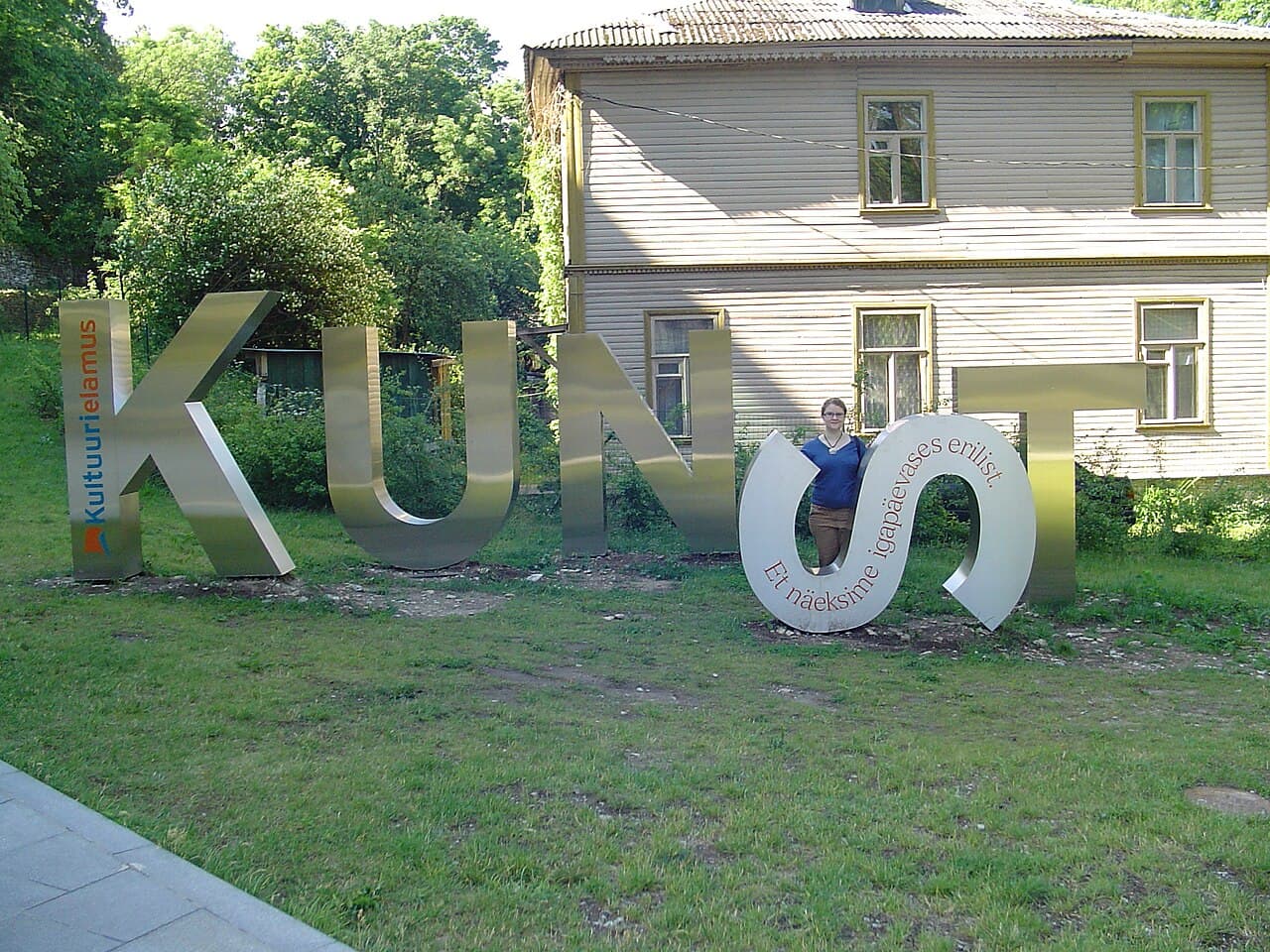
Kumu's permanent collection devotes a floor to art made in Soviet Estonia and continues into the 1990s. That chronology makes room for questions that a political-history exhibition may only touch: what artists depicted, which formal languages they used, how institutions shaped production, and how work changed around restored independence.
Art is not a simple illustration of repression or freedom. Look for differences among official expectation, personal subject, experimentation, and retrospective interpretation. Kumu broadens the evidence from laws and institutions to visual culture, while the 1990s material prevents 1991 from acting like an instant boundary after which all practice became entirely new.
Sources: Art Museum of Estonia07
End with collective action, not a tidy conclusion
The Song Festival Grounds visitor centre interprets the venue's relationship to the Singing Revolution and independence. The physical site had already hosted song celebrations for decades, so late-1980s gatherings drew power from an established culture of mass participation. Vabamu places that movement within a broader restoration process rather than presenting singing as its only cause.
A coherent sequence therefore moves from framework to focused evidence and finally to collective public action: Vabamu, one site at Maarjamäe or Pagari Street, and the grounds if time and current access permit. End with questions about how memory is maintained. Freedom is not represented by one triumphant object but by institutions repeatedly choosing how to tell it.
Sources: Tallinn Song Festival Grounds Foundation; Vabamu Museum of Occupations and FreedomUseful answers
Reader questions
Where should I begin learning about Estonia's recent history?
Vabamu is the broadest starting point in this set. Its permanent exhibition connects occupation, crimes against humanity, exile, Soviet everyday life, restoration of independence, and freedom. Once that framework is clear, a focused site such as the KGB Prison Cells or Maarjamäe can add depth.
Sources: Vabamu Museum of Occupations and Freedom; Vabamu Museum of Occupations and Freedom; Estonian History MuseumAre Vabamu and the KGB Prison Cells the same visit?
No. They are both operated by Vabamu, but they are distinct exhibitions at different sites. Freedom Without Borders gives a broad historical narrative. The Pagari Street cells focus on detention, interrogation, prisoner experiences, and the physical setting of Soviet security repression.
Sources: Vabamu Museum of Occupations and Freedom; Vabamu Museum of Occupations and FreedomWhat is the difference between Maarjamäe Palace and the nearby memorial?
The palace is an Estonian History Museum venue whose permanent exhibition follows the republic's hundred-year story. The outdoor memorial is a commemorative landscape centred on victims' names, the Journey, the Home Garden, and an electronic memorial. One interprets national history; the other prioritizes remembrance.
Sources: Estonian History Museum; Estonian Institute of Historical MemoryWhy include Kumu in a freedom-and-memory theme?
Kumu supplies evidence that political museums cannot: art made in Soviet Estonia and during the 1990s. Its chronological displays allow visitors to examine cultural production across regime change without assuming that artworks are transparent political documents or that artistic practice changed overnight at independence.
Sources: Art Museum of EstoniaRead the evidence
Sources and further reading
These sources support the relevant sections above. Plans and comparisons are editorial suggestions. Check operators for current arrangements.
- Freedom Without Borders ↗Vabamu Museum of Occupations and Freedom · Research date 14 September 2026
The permanent exhibition's five themes, individual-centred historical scope, electronic guide, and family route.
- Locked Up Stories: The KGB in Estonia ↗Vabamu Museum of Occupations and Freedom · Research date 14 September 2026
Pagari 1's detention and interrogation history, prisoner stories, cells, and communication between detainees.
- The Memorial ↗Estonian Institute of Historical Memory · Research date 14 September 2026
The Maarjamäe memorial's Journey, name plaques, Home Garden, and electronic memorial.
- Maarjamäe Palace ↗Estonian History Museum · Research date 14 September 2026
The palace's original commission, 2018 museum opening, My Free Country exhibition, and outdoor Soviet monuments.
- Permanent Exhibitions ↗Art Museum of Estonia · Research date 14 September 2026
The permanent sections on art in Soviet Estonia and the 1990s.
- Visitor Centre ↗Tallinn Song Festival Grounds Foundation · Research date 14 September 2026
The permanent exhibition relating the grounds to the Singing Revolution and independence.